
The Decline of Democracy in Indonesia: A Hobbesian Warning and Its Consequences for ASEAN Diplomacy
- Ferdinando Yuke Da Cruz - Indonesia

Introduction
Two decades after the 1998 Reformasi, Indonesia’s democracy was once hailed as one of the most remarkable achievements in Southeast Asia. Direct elections, press freedom, and civic participation were celebrated as milestones in the country’s transition from the authoritarian New Order regime. Yet, recent political developments suggest a troubling regression. The 2024 elections, the rise of dynastic politics, and waves of mass demonstrations against the House of Representatives (DPR) indicate that the substance of Indonesian democracy has steadily eroded.
To better grasp this situation, it is instructive to revisit the ideas of Thomas Hobbes (1588–1679), an English political philosopher who lived through civil war. In his seminal work Leviathan (1651), Hobbes articulated the notion of a social contract, whereby individuals surrender part of their freedoms to a sovereign authority in exchange for security. Without such authority, Hobbes argued, human life would be “solitary, poor, nasty, brutish, and short.” Yet the Hobbesian social contract was never meant to serve as a blank check: if rulers fail to provide security and instead abuse their power, the very essence of the contract collapses. Hobbes’ framework thus sheds light on the paradox of Indonesian democracy, which appears functional in its procedures but hollow in its spirit.
Hobbes’ Social Contract and Indonesian Politics
The Reformasi of 1998 can be understood as a new social contract: the people rejected authoritarianism and embraced democracy as the foundation of governance. The expectations were clear—political freedom, fair representation, and a state committed to protecting citizens’ rights. Yet the trajectory of Indonesian politics today reveals an erosion of trust.
The 2024 election illustrates this crisis. A major controversy erupted when the Constitutional Court altered the minimum age requirement for presidential and vice-presidential candidates. This change clearly appeared to benefit one particular vice-presidential candidate, Gibran Rakabuming, who is none other than the biological son of the former president, Joko Widodo. Many citizens perceived the ruling not as an act of judicial independence but as a calculated maneuver to entrench dynastic power. The increasingly overt practice of political dynasties illustrates how authority is now tilted toward familial and oligarchic interests rather than the people. As a result, the democratic arena, which should ensure fair competition and equal opportunity, has been reduced to a playing field for a narrow elite.
This dynamic evokes Hobbes’ defense of absolute monarchy, albeit in a different form. For Hobbes, sovereign monarchy was necessary to guarantee stability. In Indonesia, however, dynastic politics undermines the very essence of democracy and erodes the legitimacy of the social contract.
The crisis of trust has become even more visible in mass demonstrations against the DPR, particularly in response to contentious issues such as the weakening of the Corruption Eradication Commission (KPK) or the ratification of the new Criminal Code (KUHP). For many, the DPR no longer functions as a genuine representative body but rather as an extension of elite interests. In Hobbesian terms, citizens originally surrendered certain freedoms for the sake of security; yet when the state itself becomes a threat to civil rights, the contract can be said to have been violated.
Implications for Indonesia’s Diplomacy in ASEAN
The decline of democracy in Indonesia is not merely a domestic concern; it also reverberates in the regional arena, particularly within ASEAN. For years, Indonesia was regarded as the “democratic locomotive” of Southeast Asia. However, as the quality of its democracy has declined, that perception has begun to fade.
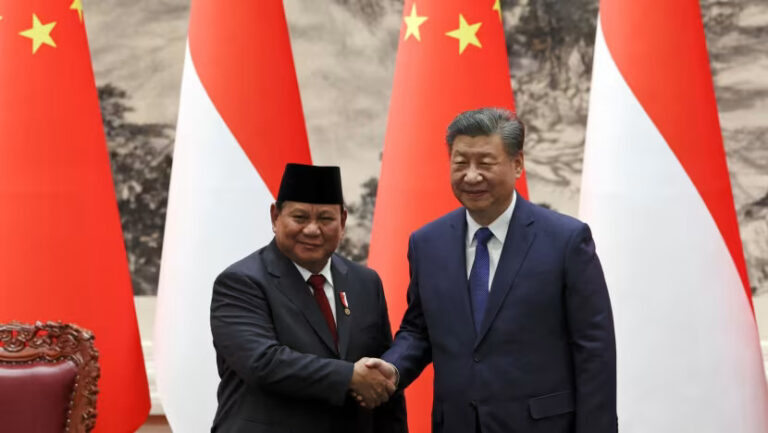
Other ASEAN states-many of which operate under semi-authoritarian systems may interpret Indonesia’s democratic backsliding as validation of their own governance models. Rather than serving as an exemplar, Indonesia risks forfeiting its moral authority to champion democracy and human rights in regional forums. Moreover, fragile domestic political stability diminishes the credibility and effectiveness of Indonesia’s diplomacy. ASEAN requires strong leadership, but such leadership is difficult to sustain when domestic democracy suffers a crisis of legitimacy.
In short, the “death of democracy” in Indonesia is not merely an internal predicament; it also undermines Indonesia’s capacity to contribute meaningfully to the region.
Conclusion
Reading Indonesian politics through the lens of Hobbes’ social contract exposes a sobering irony. The state, which ought to function as the Leviathan to safeguard its citizens, has instead become a vehicle of elite domination. Indonesia’s democracy remains procedurally intact, yet its core—the sovereignty of the people—has been increasingly disregarded. Consequently, many citizens now perceive democracy in Indonesia as effectively dead. Should this trajectory continue, the country risks losing its strategic role both in the eyes of its own people and in the regional arena.
The solution lies not only in improving electoral procedures but also in restoring the broken social contract by rebuilding public trust, strengthening independent institutions, and resisting oligarchic capture. Hobbes reminds us that without legitimate authority, human life descends into chaos. Yet Indonesia faces a different peril: authority exists, procedures are in place, but justice and popular sovereignty have withered. This is where democracy dies slowly—and where the urgent task is to revive it.
Some practical measures to reinvigorate democracy in Indonesia include: (1) Enhancing political literacy among citizens so they remain critical, politically aware, and resistant to money politics and disinformation; (2) Strengthening civil society and independent media to serve as counterweights to power rather than instruments of oligarchy; (3) Reforming democratic institutions such as the General Elections Commission (KPU), Constitutional Court (MK), Corruption Eradication Commission (KPK), and the DPR to ensure independence from elite interference; (4) Restricting dynastic politics and oligarchy through stricter regulations on nepotism and conflict of interest to prevent a disguised monarchy; and (5) Restoring the credibility of Indonesia’s diplomacy within ASEAN, where a healthy domestic democracy would once again allow Indonesia to stand as a genuine model of democratic governance in Southeast Asia.*
Read More : Current State of Peace and Democracy in Sri Lanka