Solidarity with the Poor : The Threshold of True Hope
A Theological Reflection on Pope Leo XIV’s Dilexi Te for Asian Youth
When Pope Leo XIV published his Apostolic Exhortation Dilexi Te (“I Loved You”) early last October, I felt a profound sense of relief accompanied by a prayer of gratitude. In an era of uncertainty, his declaration to faithfully follow the spirit, theology, and pastoral focus of his predecessor, Pope Francis, served as a lighthouse providing great stability to our Church. It was a confirmation that the Church would unwaveringly continue to walk the path of mercy, staying close to the marginalized.
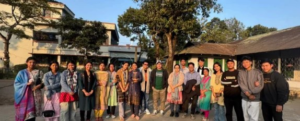
To align with this significant moment, the Woori Theology Institute(WTI) organized a four-week course to study this document in depth. I was in charge of the first session, sharing an overview of Dilexi Te along with its theological and pastoral significance. As I engaged with the forty or so Korean believers present, I felt a strong desire to share these deep insights with a wider circle, especially with the youth of Asia. Today, I would like to share the theological essence of this document with you through this newsletter. Through this study, I was able to reaffirm just how strongly both Pope Francis and his successor, Pope Leo, emphasize solidarity with the poor. I believe this solidarity is the fundamental virtue that our Church must never forget in its pastoral activities. Only when we stand firmly on this foundation can we truly speak of “Hope.”
The Poor as “Revelation” Itself
The most striking theological shift presented in Dilexi Te is not merely moving the poor from being an “ethical object” to a “theological place,” but explicitly declaring them to be “Revelation” itself. It suggests that when we help the poor, it is not just that God is pleased with our good deeds, but that God reveals Himself within them. Paragraph 5 declares, “This is not a matter of simple human kindness but of revelation. Contact with the lowly and powerless is the fundamental way to meet the Lord of history.” Here, the word “revelation” is decisive. Encountering the poor is not an optional act of charity but an epistemological prerequisite for knowing God. Jesus revealed Himself not only as a poor Messiah but as the Messiah of and for the poor (no. 19-20). Since poverty characterized every aspect of Jesus’s life, any Christology that excludes poverty is merely fiction.
We must clearly understand the fact that the Lord “took on flesh” (no. 110) in the hungry, the thirsty, and the imprisoned. This is not a metaphor but the “continuation of the Incarnation in history,” where the flesh of Jesus two thousand years ago is ontologically connected to the wounded flesh of the poor today. If the Bible is “written revelation,” the lives of the poor are “lived revelation.” This tradition of “Solidarity with the Poor” opened its floodgates at the Second Vatican Council, flowed through the “Option for the Poor” at the Medellín Conference (1968), and was concretized as the “Preferential Option for the Poor” at the Puebla Conference (1979). Today, we confirm that this enduring tradition remains vividly alive, passing from Pope Francis to Pope Leo.
Liturgy and Justice: A Holy ‘Sal-lim’
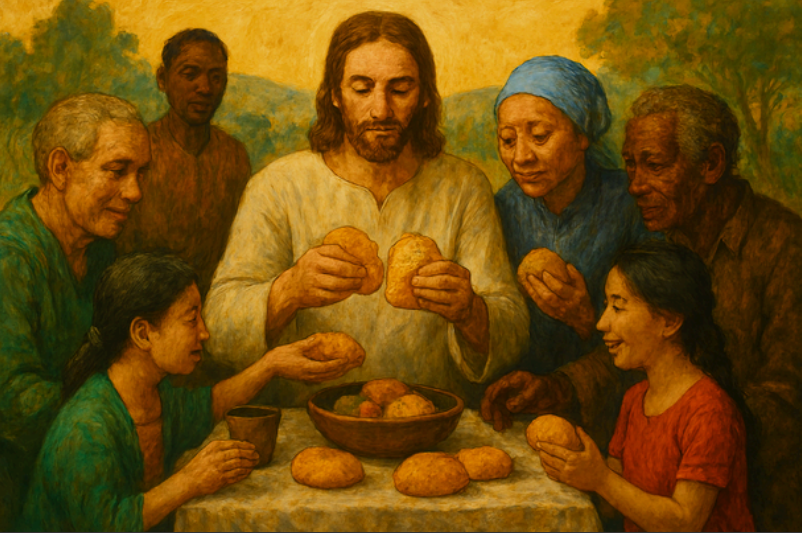
This solidarity awakens us to the truth that liturgy and justice are one. The act of feeding the hungry and advocating for their rights is, in itself, a Mass offered on the altar of the world. The act of breaking bread connects the inside of the church with the outside world into one holy “Sal-lim” (a Korean concept meaning “saving life” or “enlivening”). The two pillars of our faith—”Revelation” (Where is God?) and “Liturgy” (What do we do?)—must both be built upon the concrete lives of the poor.
Of course, there are lingering regrets. The document seems somewhat lacking in a precise analysis of the neoliberal capitalist system or a deep reflection on the scars left by imperialism and colonialism. However, we have not yet seen Pope Leo’s full social encyclical. Bearing this unfinished task and patiently practicing the message of Pope Leo while waiting for his next teaching is also, I believe, a Christian attitude toward hope. Perhaps this attitude bears a strong resemblance to the deep and quiet character of our Asia. In this time of Doing Dabar, or God’s Words, let us not cease our solidarity with the poor, who are the living revelation