RISING AGAINST THE FLOOD : FIGHTING CORRUPTION, DEFENDING THE VULNERABLE
- Tricia Marie R. Medel
The Philippines is one of the countries most vulnerable to climate change, experiencing frequent and devastating typhoons, floods, and heat waves. Last November 2025, one of the most heartbreaking disasters hit the country when Typhoon Tino took many lives and properties, leaving many Filipinos in agony. Typhoons, tropical storms, cyclones, and low-pressure systems wouldn’t miss a chance every year to visit the country, but why is it getting worse as years go by? It is notable that many areas affected by Tino were not commonly flooded areas in the past. However, due to the country’s climate vulnerability exacerbated by its geographical location, poverty, and the corruption that is deadly to the country’s government open a can of worms. These direct and indirect causes stir the Philippines to a worse situation than in the past. The Philippines’ geographical location, being in the Pacific typhoon belt and having a tropical climate, contributes to its flood purulence. It’s not just about being in a typhoon-prone area; it’s about how resources are managed. Lack of resources wasn’t an excuse; in fact, the Philippines is abundant. Ultimately, it boils down to political governments that are long on sleaze and short on substance. While the country’s location makes it prone to natural disasters, effective governance and management could mitigate these risks.
Corruption diverts resources away from essential services and infrastructure, leaving communities more vulnerable.
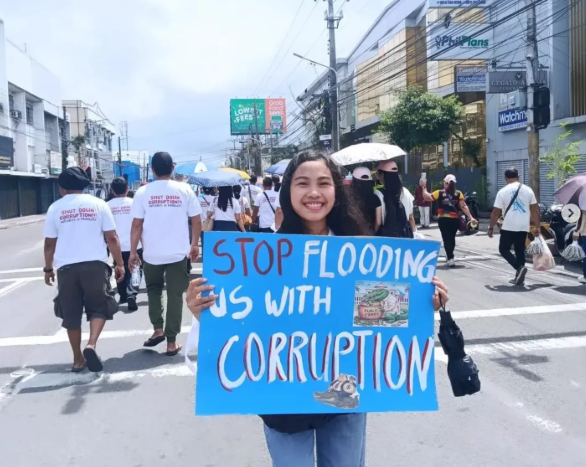
In this sense, corruption is a major contributor to the severity of flooding in the Philippines. Corruption in the Philippines, particularly in infrastructure projects, has aggravated flooding issues. Billions spent on Flood Control Projects, but many were incomplete or used substandard materials — Drainage Systems: Housing Projects, and bribery and Extortion on officials’ demand kickbacks, delaying or halting projects. Trillions spent on failed projects in exchange for the lives of many Filipinos — a rotten system is still dominating. It is tormenting how normal Filipino people suffer, while some of the corrupt government officials and agencies savor the luxury from taxpayers’ money. Corruption kills, and the poor are indeed the most vulnerable to the impacts of corruption and disasters. When infrastructure projects are poorly executed, they are the first to be affected. When disasters strike, they lose their homes, livelihoods, and sometimes, even their lives. To The protest will never stop until someone is held accountable. My community and the whole nation still call for transparency and accountability. Different organizations, sectors, and most especially the poor are still shouting for a fair and just society where no one is being deprived of their rights in accessing what’s theirs. May the government’s investigation and prosecution be immediately done.
May the truth prevail and clear the dirt of the past.
To the youth of our nation and the world, we must never hesitate to raise our voices or to challenge injustice wherever it exists. Our silence has consequences, and our courage can shape history. We must be deliberate and courageous in choosing those we place in positions of power, because the future of our country, our communities, and the generations after us is at stake. This is the time for us to stand up for our environment, to protect what has been entrusted to us, and to take responsibility for the impact of our choices. Even in the face of corruption, climate crisis, and social inequality, I believe in a brighter future —one driven by empowered, informed, and fearless youth who refuse to be passive and who are committed to building a just, sustainable, and accountable society.
- RISING AGAINST THE FLOOD : FIGHTING CORRUPTION, DEFENDING THE VULNERABLE Voice of Asian Youth
- Voice of Asian Youth