WHEN NATURE IS MANAGED, HUMANITY IS PROTECTED
- Fransiska Dobe
The Impact of Typhoons and Floods on Community Life
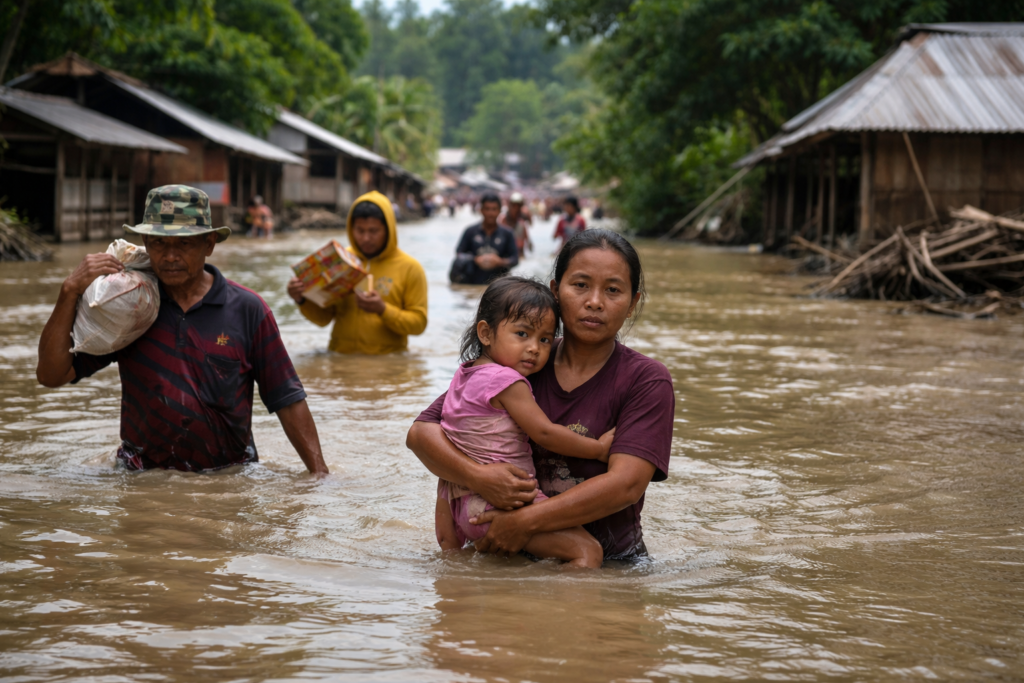
Indonesia is recognized as a nation prone to various natural disasters that directly affect its citizens’ lives. Its geographical position and natural features make many areas in Indonesia vulnerable to threats like typhoons and floods. These occurrences are not just natural events but also bring about significant social, economic, and humanitarian consequences that are immediately experienced by local communities, especially the most vulnerable groups. Typhoons and floods have far-reaching effects on people’s lives. One of the most apparent impacts is the destruction of homes and the surrounding environment. Many residences are damaged, flooded, or no longer fit for habitation. As a result, some individuals are forced to evacuate and endure living in difficult circumstances. For families with limited economic means, this situation becomes even more overwhelming, as they lose both their homes and their sources of income. As a real-life example, as described above, a natural disaster recently occurred in the Mauponggo area, Nagekeo regency, East Nusa Tenggara Province, Indonesia on Monday, September 8, 2025. Several facilities, both public and private, were heavily damaged. One house along the river was swept away by the current, two government offices were affected, three roads were blocked due to landslides caused by the intense flow of water, and two bridges were also carried away by the current. In addition, farms and rice fields were submerged, and livestock were impacted.
When the disaster occurred, many people lost their sources of income and faced difficulties in meeting their basic needs. The economic impact was significant, especially for farmers who lost their land and crops, which were their main sources of livelihood. Other impacts were also felt in the education and healthcare sectors. Schools in the area were forced to close, as many students were affected by the disaster, and school buildings were used as shelters. As a result, the teaching and learning process had to be temporarily suspended. On the other hand, public health conditions became vulnerable due to unsanitary environments, limited access to healthcare services, and psychological stress following the disaster. This shows that typhoons and floods not only cause physical damage but also affect the overall quality of life of the community
Perspectives and Reflections
If examined further, typhoon and floods that frequently occur are not solely caused by natural factors but are closely related to human behavior and environmental management. Heavy rainfall and extreme weather are indeed the main factors, but their impacts would be much greater if not balanced with preparedness and concern for the environment. One example of an indirect cause of natural disasters is the habit of excessive hunting. This hunting activity can lead to disasters in an indirect manner. First, it disrupts the balance of the ecosystem. Each animal has a specific role in the food chain. If a particular species becomes extinct or drastically reduced, the ecosystem’s balance is disturbed. Second, it leads to an increase in pest populations. When predators are continuously hunted, pest populations in agricultural areas become uncontrollable. This condition can damage crops and forests, thus increasing the risk of floods and soil erosion. Third, it causes deforestation and soil degradation. Hunting activities are often accompanied by the clearing of new paths and the burning of shrubs, reducing the soil’s ability to absorb rainwater and increasing the likelihood of floods. Lastly, it diminishes nature’s ability to act as a disaster buffer. Some animals play a role in seed dispersion and maintaining soil fertility. If these animals continue to be hunted, forests lose their natural capacity to mitigate the impacts of disasters. Another frequently mentioned factor is the decrease in water retention areas due to land conversion. Development that neglects ecological balance prevents rainwater from being absorbed effectively, resulting in flooding in residential areas. Moreover, the practice of carelessly disposing of waste worsens the situation, as it clogs drainage systems and prevents them from handling increased water flow. The lack of collective awareness and inadequate environmental
Becoming Pilgrims of Hope: Simple Actions Bringing Significant Change
In conclusion, typhoons and floods should not be seen merely as events that cause suffering, but also as opportunities to raise awareness and foster solidarity, particularly fort hose who are most impacted. In this regard, the younger generation plays a vital role as agents of hope, capable of driving positive change. Young people can start with small but meaningful actions, such as spreading awareness about the importance of environmental conservation, avoiding littering, and participating in social initiatives. For example, young people help to clean public spaces often littered with waste, and become advocates for those whose voices are seldom heard. Showing solidarity with the poor and vulnerable can take the form of sincere efforts, whether through direct involvement or by offering constructive ideas and critical perspectives. With a spirit of hope and solidarity that remains strong, it is hoped that Indonesia’s youth will not only witness the various disasters that unfold, but also actively contribute to finding solutions. Preventative actions can be taken through consistent, small steps before disasters strike. By standing in solidarity with those affected, hope can continue to shine, and a fairer, more humane future can be achieved.
- WHEN NATURE IS MANAGED, HUMANITY IS PROTECTED Voice of Asian Youth
- Voice of Asian Youth