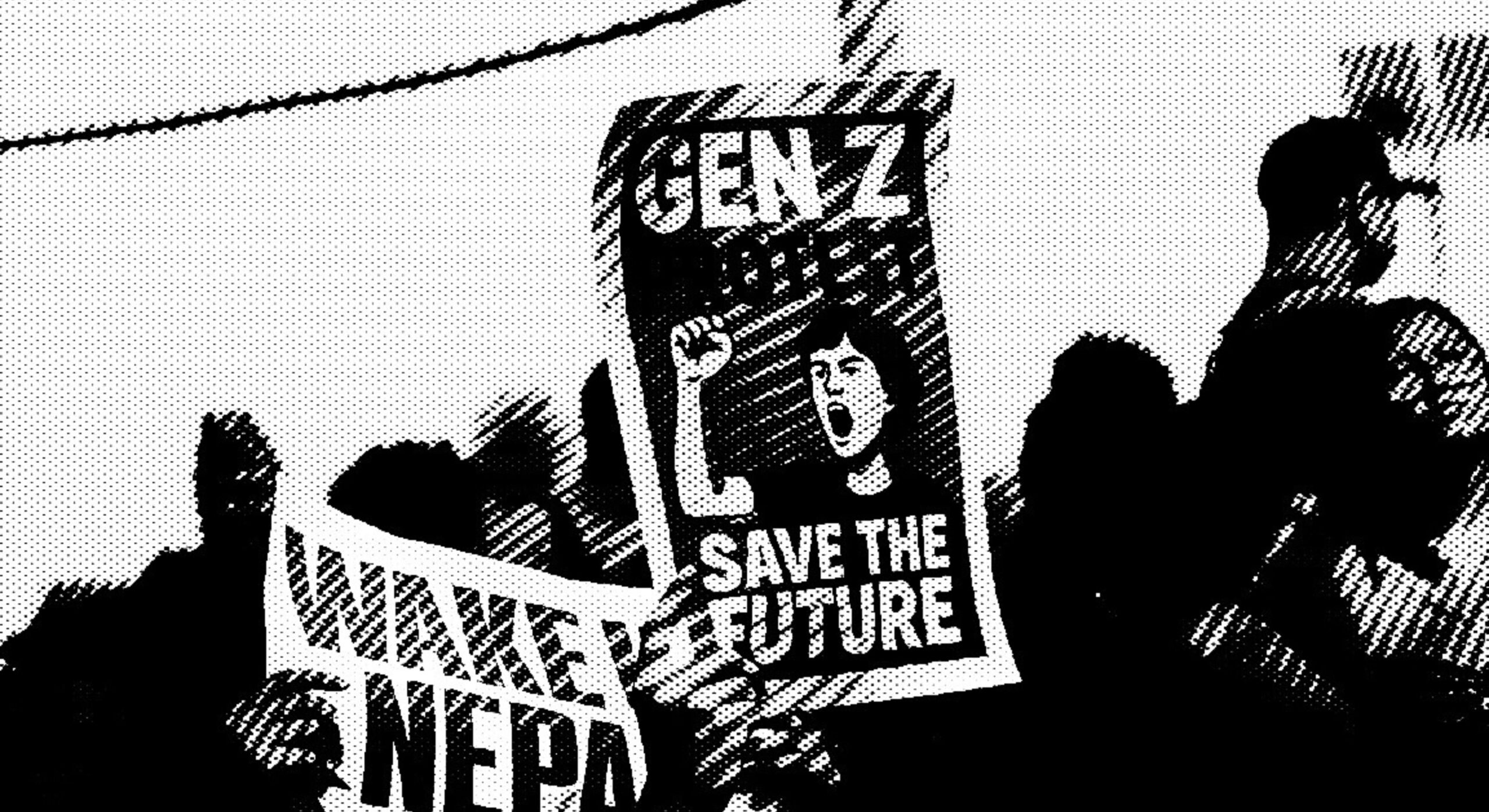
Recently, anti-government protests that began in Indonesia have spread like a domino effect to Nepal, East Timor, the Philippines, and beyond. The driving force behind this great wave is ‘Gen Z,’ born after the mid-1990s. While the protests may seem different on the surface, they share a common foundation, that is, anger at corrupt, privileged elites and resistance to inequality. This is more than a mere expression of discontent. It is a powerful cry shaking the old order in each country and demanding a new democracy. This is why some are saying that the
‘Arab Spring’ of 2010 could be re-emerging in Asia. The youth of Asia are now at the forefront of the fight for democratization.
Why Are the Youth at the Center of the Streets?
The older generation asks: Why is it that today’s youth, in particular, are so angry and taking to the streets? The reason is that they are living in a qualitatively different era from previous generations. Above all, they are ‘global citizens’ connected digitally. Through social media, Gen Z sees not only the lavish lifestyles of their own country’s corrupt politicians but also how democracy and social justice function in other nations. For them, the standard of fairness is no longer the domestic past but a universal global standard. This connectivity makes injustice all the more intolerable and, at the same time, serves as a channel for sharing strategies and courage for resistance across borders.
Secondly, they have not been co-opted by the logic of the establishment. While the older generation may hold nostalgia for the stability and growth of the industrial era, Gen Z has experienced low growth and precarious labor from birth. To them, the old system is not something to be protected, but an obstacle to be overcome
as it robs them of their future. With relatively little to lose, they can demand systemic change more boldly.
Lastly, as shown in the recent protests by citizens in Hong Kong and Myanmar, they organize in a horizontal and decentralized manner. Whereas past democracy movements centered around specific leaders or large organizations, today’s protests take the form of a flexible network, gathering and dispersing spontaneously through social media. This makes it difficult for authoritarian governments to suppress them by arresting leaders or dismantling organizations.
What Should Religion, Especially Christianity, Do?
At this moment of historical transition, religion, and Christianity including the Catholic Church, faces a momentous question. In many Asian countries, religion has been deeply intertwined with the mainstream social order. At times, it has acted as a handmaiden to unjust power, teaching conformity to the existing system. However, as young people cry out for justice and democracy, religion can no longer remain silent or side with the establishment. Regrettably, we have not heard news of the Catholic Church’s participation in this path toward democracy. The Catholic Church must follow the life and teachings of Jesus, who came to the lowest of places. This implies a ‘prophetic mission’ to stand with the oppressed, resist injustice, and proclaim justice and peace. Therefore, the Church must fulfill the following roles.
Pope Francis has repeatedly spoken of ‘good believers’ must be ‘good citizens’ at the same time. This implies that we, the Church, must be a voice that speaks the truth. The Church must clearly point out the structural evils of corruption and inequality and urge those in power to repent and change. It must inform society that the anger of the youth is not a mere emotional outburst but a yearning for justice.
It must be a safe haven. Just as the Church in South Korea served as a sanctuary for protesters and a bastion of human rights during its past democratization movement, the churches of Asia must also provide a space where young people, weary from fighting for justice, can rest spiritually and physically. This is the very practice of becoming the ‘field hospital’ that the Pope speaks of. Furthermore, it must be a place of education for justice. The Christian faith demands not only personal salvation but also the transformation of social structures. The Church should teach young people values such as human dignity, the common good, and social justice, helping them grow into more mature democratic citizens.
The voices of the young people crying out on the streets of Asia today, including all the youth who have participated in our ALL Forum’s programs, are not mere noise. They are a call from heaven to end an old era and open a new one. How Christianity chooses to act in the face of this great wave of change will determine whether it will remain a relic of an old era or be reborn as a midwife for a new democracy.*