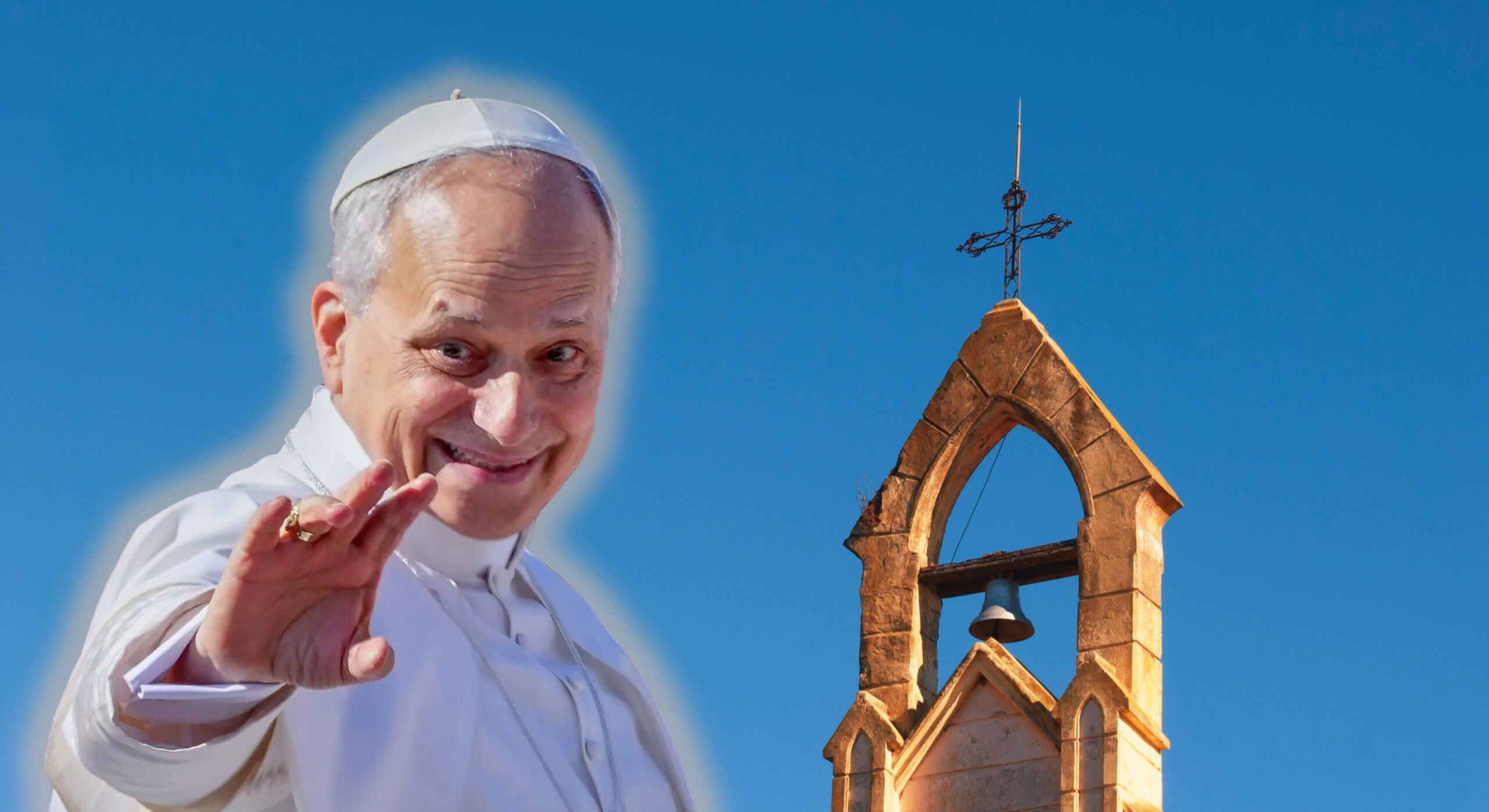
The election of Pope Leo XIV, who chose a name inspired by Pope Leo XIII author of the encyclical Rerum Novarum on social justice signals hope for leadership focused on unity, dialogue, and renewal. Many faithful hope that Pope Leo XIV can bridge tradition and modernity, uniting Catholics divided by theological and social issues. As the first Pope from the United States, he is expected to bring a fresh perspective to global challenges such as economic inequality, the climate crisis, and religious polarization.
Another hope is that Pope Leo XIV will strengthen interfaith dialogue, continuing Pope Francis’ legacy. In his first address, he emphasized the importance of love and dialogue to build bridges between communities, a vision aligned with the needs of an increasingly divided world. The faithful also hope he can inspire younger generations to remain steadfast in their Catholic faith amid growing secularism. With his missionary background, Pope Leo XIV is expected to lead a Church that “goes out” into the world, reaching the marginalized and those in need.
Urgent Actions for the New Pope
Amid complex global challenges, several urgent issues are expected to be priorities for Pope Leo XIV. First, he must address the environmental crisis. Pope Francis laid the foundation with the encyclical Laudato Si’, calling for care of our common home. Pope Leo XIV is expected to amplify this call by promoting concrete policies, such as transitioning to renewable energy and reducing carbon emissions, especially in developing countries like Indonesia, which has significant renewable energy potential but still relies heavily on fossil fuels.
Second, Pope Leo XIV must tackle social justice issues, including poverty and migration. As a member of the Order of Saint Augustine, his experience serving marginalized communities in Peru can guide his advocacy for the rights of immigrants and refugees. Collaboration with evangelical Christian organizations on social welfare issues, as initiated under Pope Francis, should also be expanded to amplify the Church’s impact.
Third, the new Pope must address internal Church challenges, such as moral scandals and declining trust among the faithful. Transparency in handling clergy abuse cases and reforming Vatican governance are urgent steps to restore confidence. Additionally, he should promote a more inclusive role for women and laypeople in Church decision-making, in line with Vatican II’s call for collegiality.
Vision for a Church of New Hope
What kind of Church do we envision under Pope Leo XIV’s leadership? Many faithful long for a “missionary” Church, as emphasized by Pope Leo XIV in his first address. This is a Church that dares to step out of its comfort zone, as Pope Francis once said: “I prefer a Church which is bruised, hurting, and dirty because it has been out on the streets, rather than a Church which is unhealthy from being confined.” This Church must be a “shepherd who smells of the sheep,” present amid the suffering of its people and proclaiming the Good News to the poor.
The envisioned Church is also inclusive and dialogical. In the context of Indonesia, known for its motto Bhinneka Tunggal Ika (Unity in Diversity), the Catholic Church can serve as a model for promoting interreligious harmony. Pope Leo XIV is expected to continue dialogue with other religious leaders, as Pope Francis did with the Grand Imam of Al-Azhar, to foster global peace. This Church must also embrace cultural diversity, ensuring that Catholic practices can be lived out in local contexts without losing their universal essence.
Moreover, the Church of new hope is one centered on Christ and humanity. As the Apostle Paul said, “We who are strong ought to bear the weaknesses of those without strength and not just please ourselves” (Romans 15:1). This Church must be a beacon of hope, as Pope Francis urged: “Let us be lights of hope! Look at the world with a positive attitude.” By focusing on love, justice, and service, the Church can bear living witness to Christ’s love in a challenging world.
Conclusion
Therefore, I would like to conclude this paper with a message of hope for the new Pope. May he become a true model of love and a champion of interfaith dialogue—a Pope who embodies harmony as our strength amid cultural and religious diversity. This is my heartfelt hope as a Catholic living in the spirit of Bhinneka Tunggal Ika in Nusa Tenggara Timur, especially in Flores, Indonesia. I dream of a missionary Church that is fully present and engaged with local challenges such as poverty, limited access to education, environmental concerns—including those arising from geothermal development projects in Flores—and the far-reaching impacts of climate change that threaten the livelihoods of local communities, indigenous peoples, and farmers.
On a broader scale, in Indonesia and across Asia, may the new Pope advance social justice by advocating for the rights of the marginalized, including migrant workers and indigenous communities, and by fostering interfaith collaboration to build peace amid global conflicts. On the world stage, I pray that Pope Leo XIV leads with courage in addressing the environmental crisis through concrete actions, as outlined in Laudato Si’—by promoting the transition to renewable energy and protecting our common home.
I also hope for more transparent and inclusive Church reforms, where women and laypeople are given greater roles, and where trust is restored through decisive action on moral scandals. The Church I envision is a Christ-centered community that stands as a beacon of hope for the world, as God’s Word proclaims: “Those who hope in the Lord will renew their strength. They will soar on wings like eagles” (Isaiah 40:31).
With prayers and support from Flores, Indonesia, the Asia, and the world, may Your Holiness Pope Leo XIV lead us all toward a future filled with love, justice, unity—and peace.